


Lower interest rates from the Federal Reserve are often something you can only fully appreciate in hindsight. A single quarter-point cut won’t move the needle on a household’s budget. Multiple cuts over time, however, are where the real savings start to add up.
If officials at the U.S. central bank follow through with another quarter-point cut at their December meeting, borrowing costs will take yet another step down. The Federal Open Market Committee (FOMC) is widely expected to reduce rates today for the sixth time since September 2024, bringing its benchmark borrowing rate down to a new target range of 3.5-3.75%. The move would mean the Fed has cut interest rates a cumulative 1.75 percentage points since rushing to rein in post-pandemic inflation in March 2022.
The difference is already showing up in the borrowing costs Bankrate tracks to varying degrees. For example, a consumer taking out a $42,000 new-car loan — close to the average amount financed — would pay just $17 less per month today than they would have if they borrowed back when rates peaked in February 2024, according to Bankrate calculations.
However, someone tapping a home equity line of credit for a $50,000 remodel would pay about $100 less each month than when HELOC rates were at their highest.
“That might start to cross into an amount that starts to make the difference for a household,” says Michele Raneri, vice president and head of U.S. research and consulting at TransUnion.
The biggest savings are likely to be among mortgage rates. Someone taking out a $500,000 mortgage today would pay roughly $584 less a month in principal and interest than when rates were at their highest in the fall of 2023. Mortgage rates don’t always move in lockstep with the Fed, but they’re driven by many of the same forces.
Even with some relief, the sting of pricey borrowing costs hasn’t fully faded. If the Fed cuts rates at its December meeting, their benchmark would still be at a level not seen for over a decade, according to a Bankrate analysis of historic Fed moves.
Add in elevated inflation and a slowing job market, and those dynamics are creating a complicated landscape for Americans attempting to manage their personal finances.
To help people make sense of this moment, Bankrate spoke with five personal finance experts about how they’ve been positioning their own money as rates move lower. Here’s what they’re doing — and the steps they say matter most for households right now.
Be your own Federal Reserve, and manage your money like a Fed chair
Headlines about higher inflation, rising recession risks and a weaker job market have been dominating the news cycle, but Nadia Vanderhall has been tuning out the noise and tuning into her own finances.
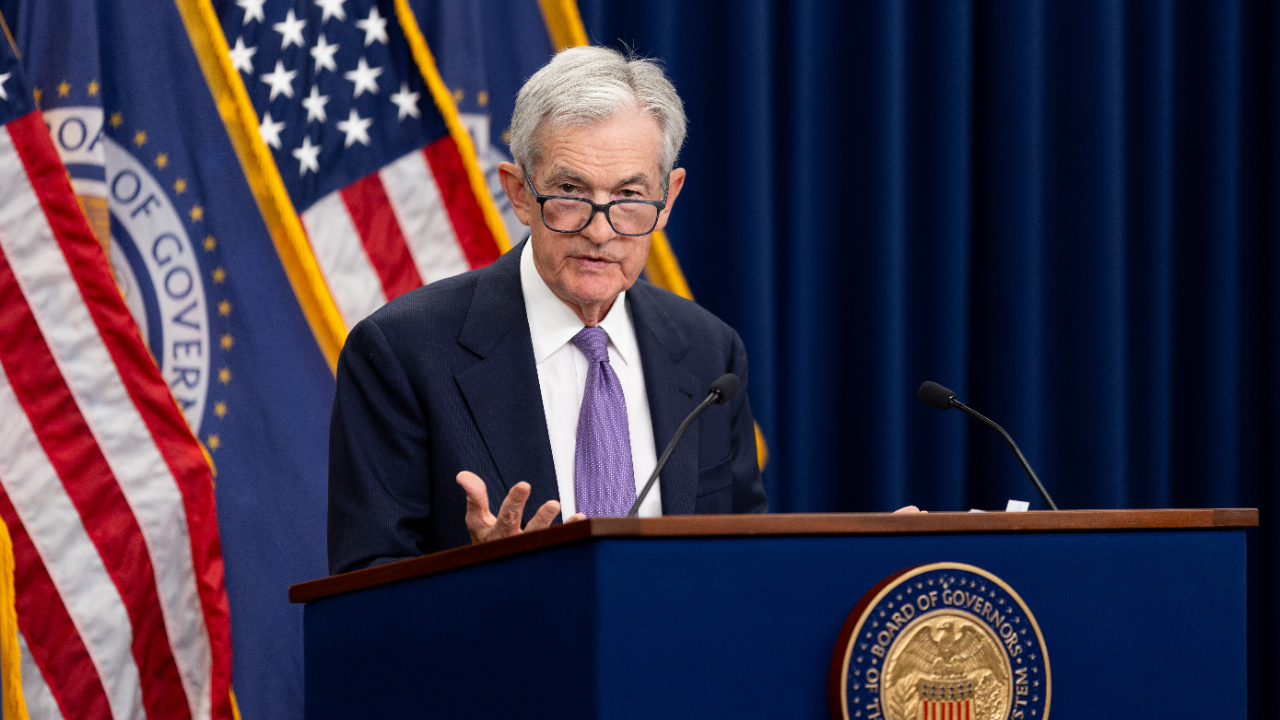
Since the Fed started cutting rates in September 2024, the financial planner and founder of Brands and Bands Strategy Group has been mimicking Fed Chair Jerome Powell in the way she manages her own personal finances. She tracks her spending as if she’s analyzing her own personal consumer price index (CPI) report, and she adjusts her savings goals quarterly — almost as if she’s preparing a new Summary of Economic Projection (SEP).
“Understanding how your personal report reads lets you react strategically rather than panic,” she says. “Plan it, don’t panic.”
If her expenses are starting to run up against her budget, Vanderhall takes it as a sign to reevaluate her spending and increase what’s in her emergency fund. After all, if her expenses have climbed, the money that she may need in an emergency likely will, too. She’s also been negotiating with creditors and other service providers for lower payments, stashing the freed-up cash into her high-yield savings account.
Vanderhall describes herself as a financial planner who cares more about whether her clients have $500 saved for an emergency than a $500,000 net worth. She recommends picking a few goals to focus on each quarter and starting small.
“Maybe after bills and life, you have $5 left over, and that’s okay,” she says. “The key is to find that money. Maybe it’s saving a bit more into a better savings product, maybe it’s tracking your spending on groceries or even leveraging no- or low-spend periods to reset. Those three things can really move the needle.”
Think differently about where you keep your cash, and remember that no amount of rate cuts will bail you out of high-interest debt
Previously, when rates on high-yield savings accounts were 5% or more, Bernadette Joy kept a little bit more money on the sidelines. Paired with Federal Deposit Insurance Corp. (FDIC) protections, those returns were offering a market-like return without any risk.
“Five percent felt like getting paid to breathe,” says Joy, who is the founder of Crush Your Money Goals and a Bankrate expert contributor.
Now, the top-yielding account on the market is offering only a 4.2% annual percentage yield (APY) — and if the Fed cuts rates more, those returns could keep falling.
As a result, Joy has been thinking differently about where she keeps her cash. She has two six-figure certificates of deposit (CDs) maturing in January that she’ll put back into traditional investments.
“When rates dropped, I found the cost of procrastinating on researching new investments with my money went up,” she says. “Your cash needs a purpose, not just a parking spot, and we don’t have that same luxury of 5% like we did the last few years.”

She’s also been advising her clients to think differently about how they put their cash to work.
Americans with credit card debt, for example, have found little help in the Fed’s rate cuts. Someone with the average credit card balance of roughly $6,500 (per TransUnion) is now paying $6 less a month, according to Bankrate calculations. If credit card annual percentage rates (APRs) fall another 25 basis points, the total savings for borrowers will amount to only $7 a month.
The average credit card APR is now 19.83%, down from 20.79%, according to Bankrate data. But borrowers with weaker credit scores may face an even higher interest rate, and some retail credit cards are pushing 30%.
Joy recommends keeping at least one month’s worth of expenses inside a checking account as a “cash-flow cushion.” After that, she advises using any remaining funds to pay down high-cost debt first before saving or investing more.
“In a falling-rate world, the math becomes even clearer: No investment consistently beats 25 percent interest working against you,” Joy says. “Paying off debt is an immediate, guaranteed return so that investing becomes less risky in a volatile macro environment.”
Use downturns in the market as a time to review your diversification
Stocks have staged an impressive comeback since plunging more than 12% in the aftermath of President Donald Trump’s “Liberation Day” tariff announcement in April. The S&P 500 is now up almost 17% since the start of the year and is trading less than a percent off of its record high as of Dec. 9.
That rally underscores how quickly sentiment can shift — and how investors who stay the course and lean on diversification are poised to reap the benefits, according to Bankrate Financial Analyst Stephen Kates, CFP.

Since the Fed began cutting rates, the only real shift Kates has made is fine-tuning his asset allocation — increasing exposure to a few areas he felt were underweighted, even if it meant selling some high-performing holdings to fund the change.
“2025 has proven to be a great year for diversified investing with nearly all major asset classes performing well,” Kates says. “I never stopped contributing to my accounts or stopped making periodic investments, but I did shift money around. … I’m happy with the results.”
Kates recommends thinking about your financial plan from a building blocks approach, which includes:
- Saving three months of your expenses in an emergency fund if you’re a single-income household or six months if you’re in a dual-income household;
- Contributing up to the company match on your employer-sponsored retirement plan;
- Working toward maxing out your health savings account (HSA) if you’re on a high-deductible health plan; and then,
- Saving at least 10% of your gross annual income in a retirement account.
Don’t hold out for lower rates if you can find the savings through refinancing now
TransUnion’s Raneri hasn’t made major changes to her own finances during the Fed’s rate-cutting cycle, but she has seen before just how much staying proactive can pay off.
When the Fed was keeping rates at near-zero as the economy healed from the coronavirus pandemic, her household refinanced their mortgage multiple times. They ultimately landed a rate below 3%.
They chased lenders and never took their eyes off the market, she says. Instead of holding out for even lower rates, they locked in the savings while they had them — knowing they could always refinance again later if rates were to drop lower.

“You don’t know when that music is going to stop; it just stops,” Raneri says. “So to be in a seat, meaning getting that interest rate locked in at its low point, is critical because you don’t know when it’s going to stop. And if you go to the seat the last time, you also get to get up and walk again.”
Her rule of thumb: check for any fees, weigh them against the interest you’d save and refinance whenever the math works in your favor.
Raneri also notes that auto loans can be refinanced, too, and in a falling-rate environment, the monthly savings can add up.
Find a financial plan that can serve you in all interest rate environments
Some financial experts haven’t made major changes since the Fed started cutting rates — and that’s also perfectly appropriate, according to Patrick Ryan, CEO and president of First Bank, which has locations across New Jersey and Florida.

What matters most is regularly reviewing your strategy — whether that’s quarterly or semiannually, he says — and using those moments to reassess your goals, your risk tolerance and how the broader rate backdrop fits in.
When in doubt, Americans should connect with a financial advisor for help, Ryan says.
“For most folks, their broader financial strategies and plans should sort of transcend the interest rate environment,” he says. “I don’t know that there is a sort of knee jerk, ‘Rates go down, do this. Rates go up, do that.’ It has more to do with staying focused on the longer-term.”
Why we ask for feedback
Your feedback helps us improve our content and services. It takes less than a minute to
complete.
Your responses are anonymous and will only be used for improving our website.
Help us improve our content
Read the full article here